
Why Some Leaders Never Quite Fit
Curiosity, Cliff Events and The Alchemists Among Us
Stepping back to the start, what emerges from reading Charles Handy’s The New Alchemists again, years later, is not merely admiration for the people inside the book. It is recognition.
Recognition of the strange restlessness that sits inside certain people long before they know what to call it. The feeling that the world as presented is somehow incomplete. The inability to walk past inefficiency, mediocrity or unnecessary conformity without mentally redesigning it. The instinct to ask “why?” when others are content to ask “how much?” or “how quickly?”
For years I thought this was simply entrepreneurship. I now think it is something deeper.
Handy observed that alchemists possess what he called a “third eye”, the ability to stand outside the mental box in which most people imprison themselves. They look at ordinary situations and see hidden possibilities. They are rarely fully satisfied. They become bored easily. They continually search for new mountains to climb. More importantly, they are often misunderstood before they are valued.
That observation landed heavily with me because I could see reflections of my own life threaded through it. The real version. The setbacks. The cliff events. The fog. The periods where the path disappeared completely.
The strange thing about fog is that from the outside it often looks like failure. However from the inside it is usually formation. The difficult years are not always evidence that you are lost. Sometimes they are evidence that you are becoming something the existing system has no category for yet.
Handy understood this better than most.
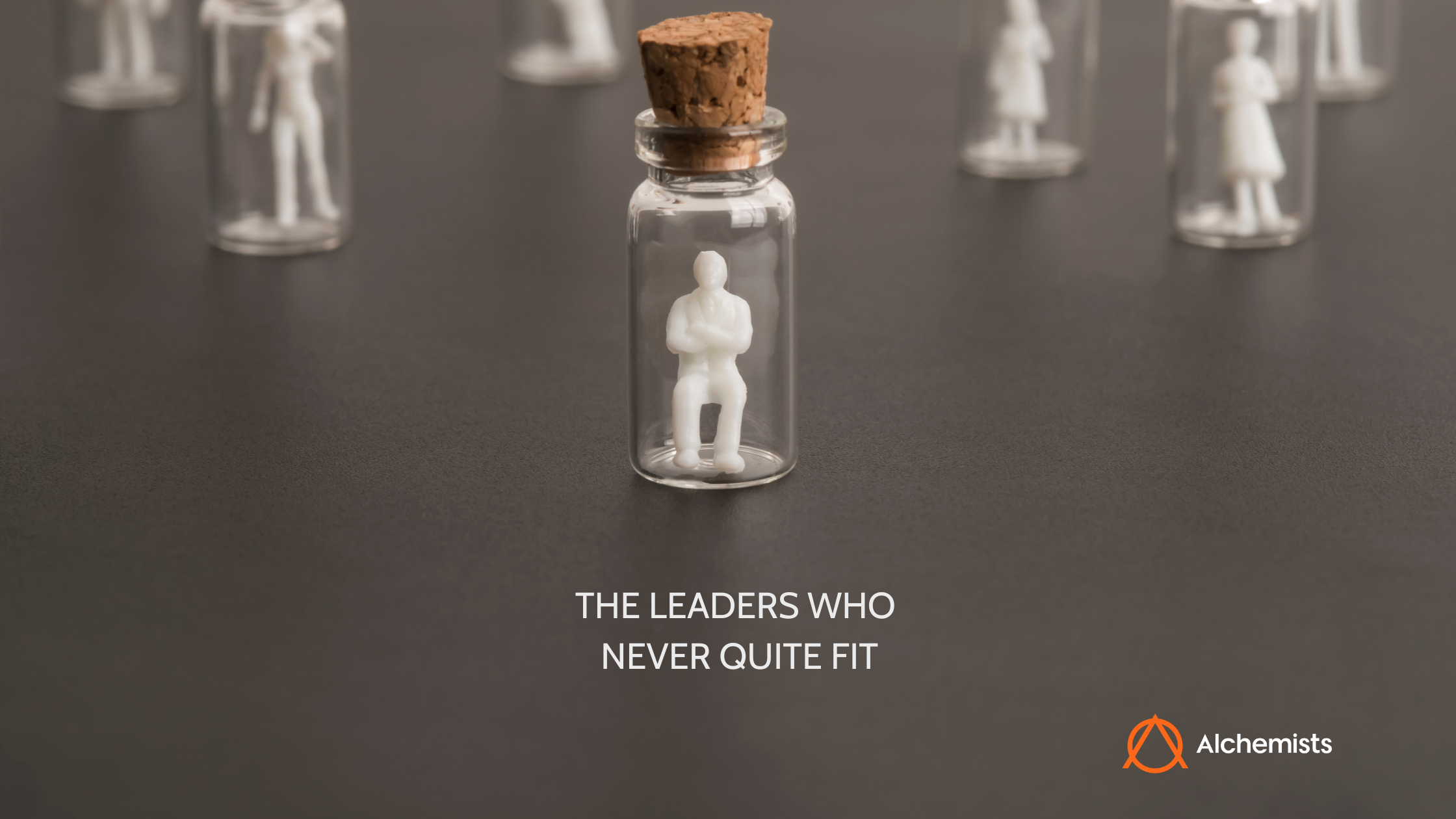
He observed that many alchemists struggle inside conventional structures because curiosity and controlled efficiency do not naturally sit comfortably together. Organisations optimise for predictability. Alchemists lean toward experimentation. Systems want compliance. Alchemists instinctively test boundaries. Institutions prefer certainty. Alchemists are drawn toward possibility.
That tension explains much of modern leadership.
Many founders, CEOs and senior leaders eventually discover that the very systems they built to create scale slowly begin to compress the curiosity that created the business in the first place. Meetings replace thinking. Performance replaces reflection. Busyness replaces exploration. The machine grows stronger while the imagination weakens.
It is one of the reasons The Alchemists was created.
Not as another networking group. Not as conventional coaching. Certainly not a motivational theatre.
It emerged from the recognition that leaders need protected space where curiosity can survive long enough for clarity to emerge again. A place where difficult conversations can happen before the decision. A place where the pressure can be spoken rather than merely managed. A place where someone can step outside the operational noise long enough to see the system they are actually inside.
Handy also observed something else that struck me deeply. He wrote that many alchemists are not motivated primarily by money, fame or power, although those things may arrive. The deeper driver is the urge to build, create, contribute and express something meaningful through their work. They are ambitious for the project more than for themselves.
That sentence explained more to me about founders and business owners than many modern leadership books combined.
The best ones are rarely chasing money alone. They are trying to build something that feels alive. Something that matters. Something that expresses who they are before time runs out.
That is why so many of them quietly carry pressure that few people ever see, and perhaps the most hopeful insight in the entire book was this: alchemy is not reserved for the young.
Handy spoke about “hibernating alchemists”, people who only later in life rediscover the deeper thing inside them after years of responsibility, survival, family or conventional careers. He quoted William Atkinson saying, “Most of us are still pregnant with possibilities, if we want to be.”
There is wisdom in that line.
Especially in a world increasingly obsessed with youthful speed, immediate visibility and algorithmic relevance. Some people bloom early. Others take decades to fully understand the shape of their own curiosity. The timing does not invalidate the alchemy.
If anything, the setbacks, the fog and the cliff events often deepen it.
Looking back now, I realise that The Alchemists was never really about business performance alone. It is an an environment where human alchemy can survive modern organisational life. A place for greater thinking before greater decisions. A place where leaders can reconnect with the part of themselves that still sees possibility when others only see process.
Because once curiosity dies, something far more serious than innovation disappears.
The future does too.